All posts filed under: Anglican

Love Calls Us To the Things of This World

One of my favorite poems is Richard Wilbur’s Love Calls Us to the Things of This World. The title sings through my mind when I am hanging laundry out on the line. The poem speaks for itself, of course, reminding us love and true spirituality is not gnostic – “bodiless and simple as false dawn.” Love isn’t found in clothes puffed with wind, but embodied in clumsy flesh and blood. I would like the words “Love Calls Us to the Things of This World” hanging in my laundry room as a constant reminder. So, I asked Bley whether she would be willing to create a “Love Calls Us” printable for the Homely Hours. She painted and handlettered a beautiful piece and is offering it to you – free for personal use. Love Calls Us to the Things of This World The eyes open to a cry of pulleys, And spirited from sleep, the astounded soul Hangs for a moment bodiless and simple As false dawn. Outside the open window The morning air is all awash with angels. Some are in bed-sheets, some …
Angels and Architecture

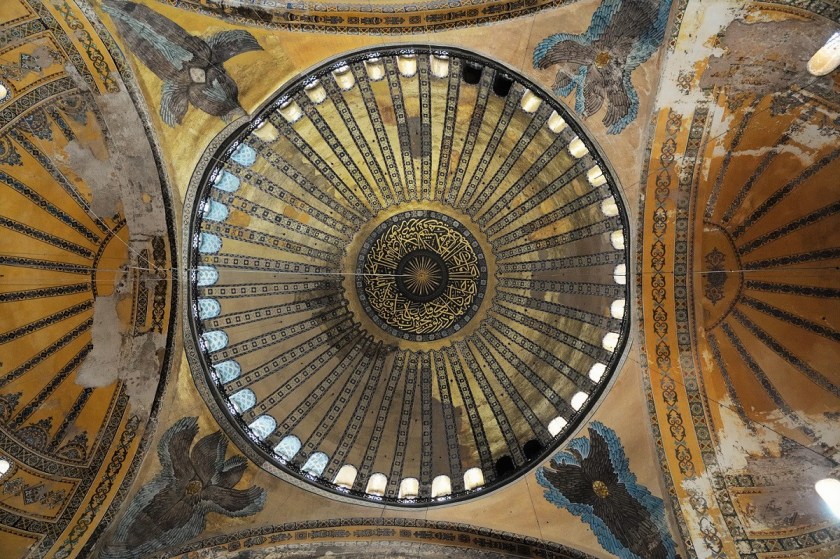
We asked Art Historian Sandy McNamara (also, our priest’s wife) about art that can help shape our imagination concerning angels. So much of what we see of angels (in terms of art) can be very kitschy and can perhaps trivialize our conception of these powerful and glorious creatures. The following is her response, drawing our attention to the reality that angels surround us as we worship.  From the earliest days of the Christian faith the church building itself has had a much bigger role in expressing the symbolic meaning of the liturgy and belief than it has in modern times.  According to a short little book entitled Liturgy and Architecture by a professor at Notre Dame both the plan of the Christian church building, as well as the furniture and paintings, derived directly from  Jewish synagogue worship.  In the synagogue a raised platform was situated in the middle of the rectangular room, which held an ark-like container storing the Torah and a seat for the rabbi who would remove the scriptures and read them in the service.  …

Dragon Bread for Michaelmas

The Feast of Saint Michael and all Angels on September 29 remains a somewhat mysterious feast day to me, perhaps rightly so, as it deals with otherworldly creatures, the “heavenly hosts.”  The collect for the day sheds some light on what we can teach our children about the importance of this feast: O Everlasting God, who hast ordained and constituted the services of Angels and men in a wonderful order; Mercifully grant that, as thy holy Angels always do thee service in heaven, so, by thine appointment, they may succour and defend us on earth; through Jesus Christ our Lord.  Amen. The Epistle reading for the day, from Revelation 12:7-12, reminds us that, “There was war in heaven: Michael and his angels fought against the dragon… and the great dragon was cast out, that old serpent, called the Devil.” In our home, we have traditionally made a loaf of sweet bread, similar to challah, and shaped the dough into the shape of a dragon during the second rising.  Any dough recipe will do; I particularly …

Preparing for Michaelmas

Phil James, of Dappled Thoughts, recently sent us a booklet on Michaelmas he wrote for his grandchildren. We are so impressed by this booklet and are very excited that he is letting us share it with you! We know you will really appreciate both his reflections on angels and what they mean for our understanding of reality, in addition to getting a glimpse into his family’s Michaelmas traditions. Thank you, Phil, for sharing this with us! Why is Michaelmas one of your family’s favorite celebrations? Honestly, I think it’s because of the fantastic nature of the menu. Once a year we eat roasted dragons tongue (which tastes a lot like pork). That’s obviously notable. And while it’s not unusual for friends to be at any of our celebrations, somehow Michaelmas developed so that the inclusion of friends in the evening became a necessary ingredient. Also, Michaelmas is a gate of sorts. We leave the unique charms of summer behind and prepare for All Hallow’s Eve, Thanksgiving, Advent, Christmas’s twelve days and Epiphany. This means the …

What are the Ember Days?

The Michaelmas Ember Days are  Wednesday, Friday, and Saturday. In this post, we give an overview to the background of the Ember Days as well as their purpose (If you don’t have time to read anything else, do scroll down to the bottom of the post and read the poem Autumn Inaugural by Dana Gioia; it is rather perfect for these days). What are the Ember Days? The Ember Days are set aside by the Church as a way to mark the passage of seasons through prayer and fasting.  As you may suspect, this happens four times a year: in winter, after the feast of St. Lucy; in spring, after Ash Wednesday; in summer, after Pentecost Sunday; and in fall, after Holy Cross Day. An old English rhyme states: “Fasting days and Emberings be / Lent, Whitsun, Holyrood, and Lucie.” In Latin, these days are called Quatour Tempora (Four Times). The word “Ember Days” is from the Anglo-Saxon ymbren, a circuit or revolution (from ymb, around, and ryne, a course, running). Folk etymology claims that the source of “ember” comes …

The Churching of Women

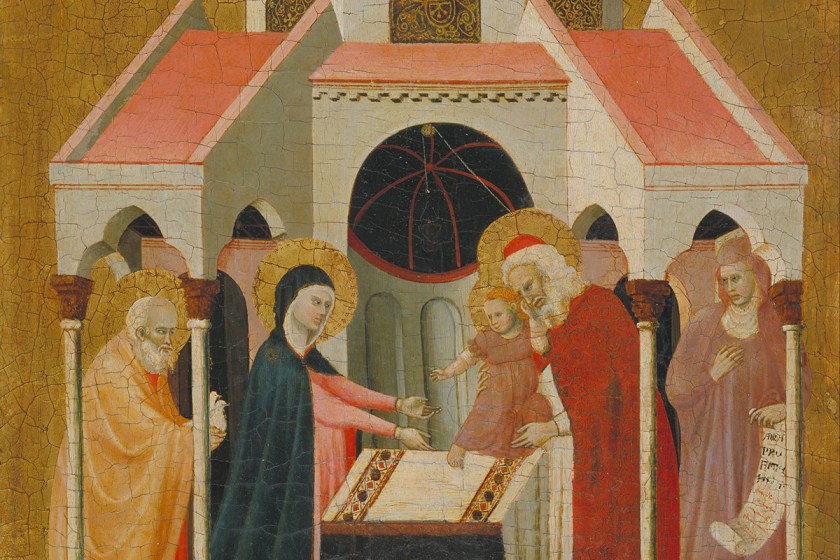
I gave birth to my second daughter a little over three weeks ago. So Sunday, as part of the celebration of the Feast of the Transfiguration, our priest also wanted to include the Churching of Women. The Churching of Women liturgy is found after the Holy Matrimony section in the Prayer Book. It is headed “The Thanksgiving of Women after Child-birth, Commonly called the Churching of Women.” It consists primarily of the woman reciting Psalm 116 with the priest, along with a thanksgiving on behalf of the woman and a prayer that the new baby may grow in the love and service of God. One main reason my husband and I decided to become Anglicans is the arrangement of Scripture and prayers flowing out of Scripture in the Book of Common Prayer. Here, we have living words for practical church use that can hold all of life –  that are strong and rich enough to encompass both the joy and the sorrow of the human condition. So, I love that this short liturgy exists and …

Love In Our Midst: The Good Samaritan

God is raising the world up to glory, and bringing glory to the Earth. That is one of the hopes that come in the Gospel of Christ. But it is a hard statement to understand in the midst of all the chaos and heartache of this week’s events in our country. What does God’s victory over the world and the evil one and sin look like in our situation? We don’t seem to see great miracles like the apostles and prophets witnessed. And it sometimes does feel like darkness is overcoming the light, and the kingdom of righteousness is retreating from the battlefield. So where is the effects of the Easter victory we proclaim and celebrate every Sunday?

Family Culture and Sunday Tea

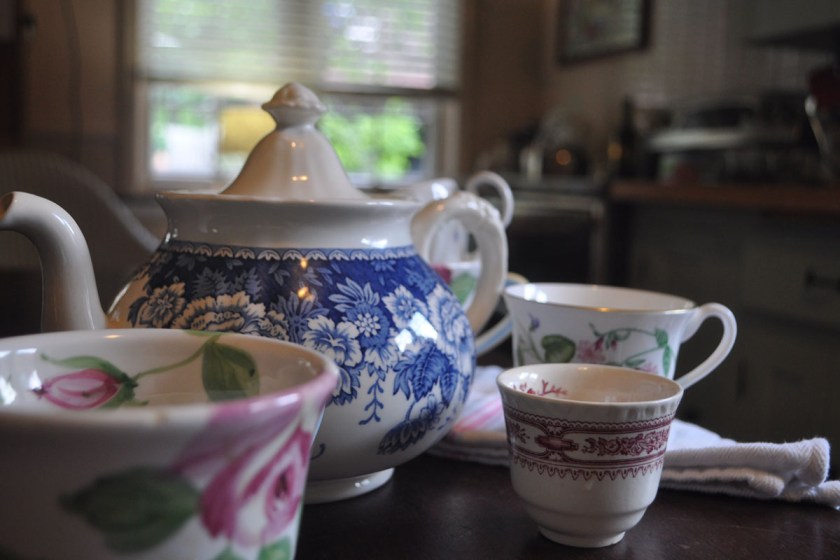
Our eldest child is seven now, which doesn’t seem so old, but in today’s society means he will soon be noticing more about the culture, asking us possibly difficult questions, paying more attention to his peers, and seeing how our family is different from others.  The teen years are looming, in the not so distant future, and I have been thinking that now is the time to focus on building a “family culture” to provide a buffer between our family and society at large. What is a “family culture”?  No, it’s not a bad joke about the sharing of bacteria in your house.  A family culture is, simply, how your family differs from every other family.  I appreciate this post from Catholic All Year on this topic. A family culture mostly has to do with preferences: What does your family like?  And matters of discipline: What will you allow/not allow in your home?  And other fun stuff: How do you like to recreate together?  How do you find rest and relaxation together?  Your family is like …

Trinity Sunday: A Few Traditions and Links

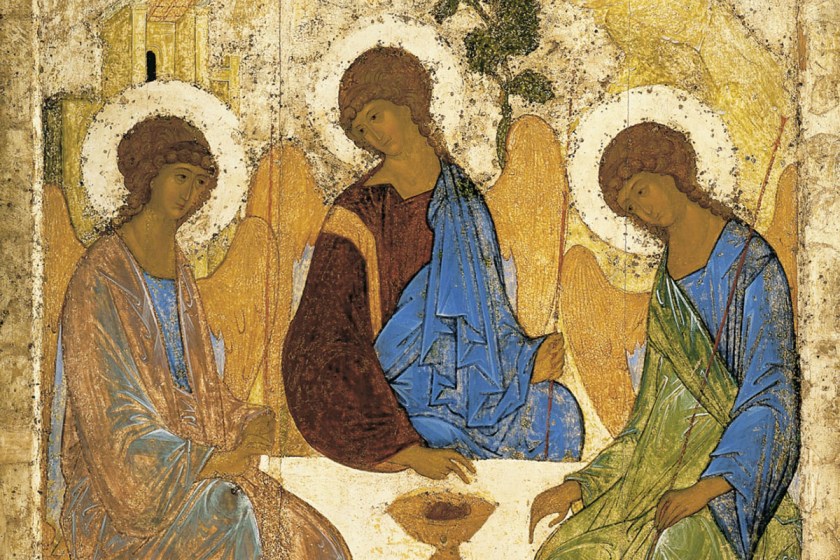
The Collect for Trinity Sunday “Almighty and everlasting God, who hast given unto us thy servants grace, by the confession of a true faith, to acknowledge the glory of the eternal Trinity, and in the power of the Divine Majesty to worship the Unity; We beseech thee that thou wouldest keep us steadfast in this faith, and evermore defend us from all adversities, who livest and reignest, one God, world without end. Amen.” On Trinity Sunday, it is a tradition to sing  “I Bind Unto Myself Today.” For more on this glorious hymn, you can read our post on “The Breastplate of St. Patrick.” Along these lines, here is also  a beautiful post on Celtic Christianity and Trinitarian Theology, specifically how it manifests itself in the Carmina Gadelica, a collection of Gaelic hymns and prayers: For the Gaelic writers, the Trinity is not an esoteric dogma to be recited and systematized but rather a living and lived reality, for God as Creator is near to us in creation, and all that he has made is a reflection …

Simple Pentecost Traditions for the Home

Nevertheless, I tell you the truth: it is to your advantage that I go away, for if I do not go away, the Helper will not come to you. But if I go, I will send him to you. And when he comes, he will convict the world concerning sin and righteousness and judgment: concerning sin, because they do not believe in me; concerning righteousness, because I go to the Father, and you will see me no longer; concerning judgment, because the ruler of this world is judged. John 16:7-11 (ESV). As always, we would direct you to the extensive repository of information to be found at Full Homely Divinity. We thought we would also highlight a few ideas. Pentecost Litany Here is a printable of a Litany of the Holy Ghost, provided by our priest Fr. Wayne McNamara: Litany of Holy Ghost Barefoot on Pentecost: When researching this day, we learned that one Pentecost tradition is to go outside barefoot on Sunday morning and walk around in the dew. This originated from a verse in the …