Author: thehomelyhours

All Hallows Eve & All Saints Day: Anglican Links and Quotations

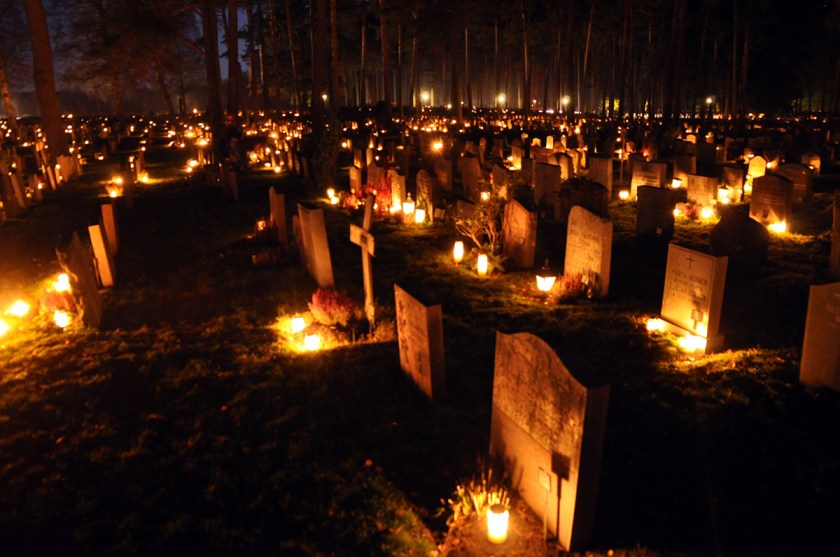
Collect for All Saints: O ALMIGHTY God, who hast knit together thine elect in one communion and fellowship, in the mystical body of thy Son Christ our Lord; Grant us grace so to follow thy blessed Saints in all virtuous and godly living, that we may come to those unspeakable joys which thou hast prepared for those who unfeignedly love thee; through the same thy Son Jesus Christ our Lord. Amen. In this post, we’ve gathered together some Anglican links and quotations for you about All Hallows Eve and All Saints Day. We highly recommend that you read Full Homely Divinity’s article on All Hallows and Day of the Dead. The whole post (which includes background on Halloween, All Saints, and All Souls) is well worth your time, but here are a few highlights.  On Remembering the Dead:  “The last night of October and the first days of November are the days set aside for remembering the dead, and contemplating our own deaths. There can be little doubt that our Christian observances owe much to pre-Christian customs. …

Love Calls Us To the Things of This World

One of my favorite poems is Richard Wilbur’s Love Calls Us to the Things of This World. The title sings through my mind when I am hanging laundry out on the line. The poem speaks for itself, of course, reminding us love and true spirituality is not gnostic – “bodiless and simple as false dawn.” Love isn’t found in clothes puffed with wind, but embodied in clumsy flesh and blood. I would like the words “Love Calls Us to the Things of This World” hanging in my laundry room as a constant reminder. So, I asked Bley whether she would be willing to create a “Love Calls Us” printable for the Homely Hours. She painted and handlettered a beautiful piece and is offering it to you – free for personal use. Love Calls Us to the Things of This World The eyes open to a cry of pulleys, And spirited from sleep, the astounded soul Hangs for a moment bodiless and simple As false dawn. Outside the open window The morning air is all awash with angels. Some are in bed-sheets, some …

Rich in Love: The Story of St. Francis

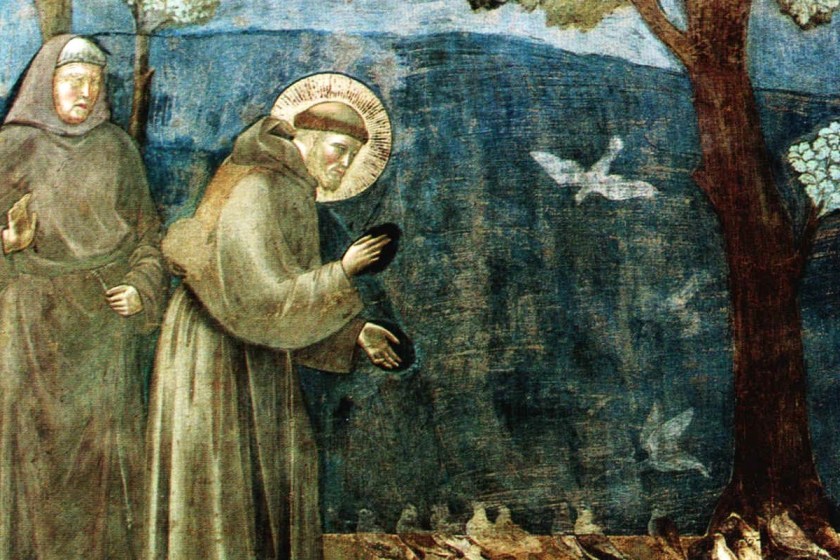
Thank you to Jeremy Downey for sharing with us the story of St. Francis, which he wrote for our church’s Godly Play program. At the bottom of this post, you can see the books on St.Francis recommended by Jeremy and his wife Jennifer. Rich in Love: St. Francis, a Godly Play-Inspired Story Francis was born in the town of Assisi, in Italy. His father was a wealthy merchant, who named his son Francis—which means “Frenchman”—because he loved the fine wares and delicious food of France. Francis grew up loving fine food and wine and beautiful clothes and music and dancing as well, and he loved to have wonderful parties with his friends so he could share these things with them. He wanted to be brave and strong and to protect his town from enemies, so when Assisi went to war against a nearby town he rode off with the soldiers to fight. In the battle Francis was captured and made a prisoner, and he had to live for a year in a dark and miserable dungeon. But …

Angels and Architecture

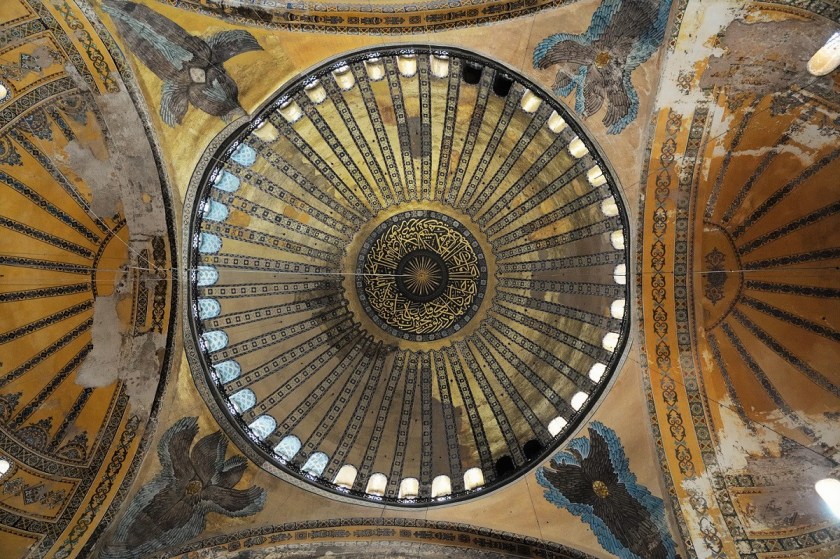
We asked Art Historian Sandy McNamara (also, our priest’s wife) about art that can help shape our imagination concerning angels. So much of what we see of angels (in terms of art) can be very kitschy and can perhaps trivialize our conception of these powerful and glorious creatures. The following is her response, drawing our attention to the reality that angels surround us as we worship.  From the earliest days of the Christian faith the church building itself has had a much bigger role in expressing the symbolic meaning of the liturgy and belief than it has in modern times.  According to a short little book entitled Liturgy and Architecture by a professor at Notre Dame both the plan of the Christian church building, as well as the furniture and paintings, derived directly from  Jewish synagogue worship.  In the synagogue a raised platform was situated in the middle of the rectangular room, which held an ark-like container storing the Torah and a seat for the rabbi who would remove the scriptures and read them in the service.  …

Preparing for Michaelmas

Phil James, of Dappled Thoughts, recently sent us a booklet on Michaelmas he wrote for his grandchildren. We are so impressed by this booklet and are very excited that he is letting us share it with you! We know you will really appreciate both his reflections on angels and what they mean for our understanding of reality, in addition to getting a glimpse into his family’s Michaelmas traditions. Thank you, Phil, for sharing this with us! Why is Michaelmas one of your family’s favorite celebrations? Honestly, I think it’s because of the fantastic nature of the menu. Once a year we eat roasted dragons tongue (which tastes a lot like pork). That’s obviously notable. And while it’s not unusual for friends to be at any of our celebrations, somehow Michaelmas developed so that the inclusion of friends in the evening became a necessary ingredient. Also, Michaelmas is a gate of sorts. We leave the unique charms of summer behind and prepare for All Hallow’s Eve, Thanksgiving, Advent, Christmas’s twelve days and Epiphany. This means the …

What are the Ember Days?

The Michaelmas Ember Days are  Wednesday, Friday, and Saturday. In this post, we give an overview to the background of the Ember Days as well as their purpose (If you don’t have time to read anything else, do scroll down to the bottom of the post and read the poem Autumn Inaugural by Dana Gioia; it is rather perfect for these days). What are the Ember Days? The Ember Days are set aside by the Church as a way to mark the passage of seasons through prayer and fasting.  As you may suspect, this happens four times a year: in winter, after the feast of St. Lucy; in spring, after Ash Wednesday; in summer, after Pentecost Sunday; and in fall, after Holy Cross Day. An old English rhyme states: “Fasting days and Emberings be / Lent, Whitsun, Holyrood, and Lucie.” In Latin, these days are called Quatour Tempora (Four Times). The word “Ember Days” is from the Anglo-Saxon ymbren, a circuit or revolution (from ymb, around, and ryne, a course, running). Folk etymology claims that the source of “ember” comes …

Godly Play at Christ the King, Part 2

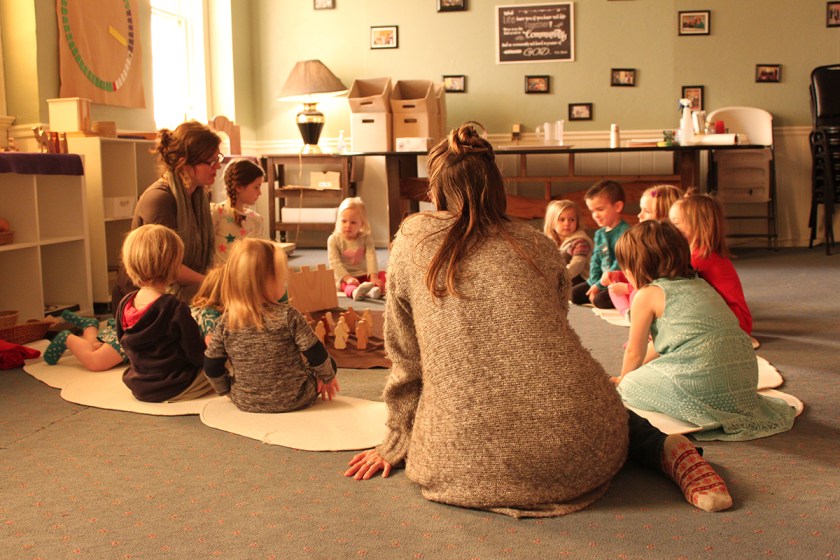
This is the second part of our series on Godly Play. You can find the first part on its philosophy here. Thank you to Jennifer Downey and Michelle Abernathy for being willing to share about this great program. One parent writes, “I love being part of a church that . . . seeks to invite everyone (including littles) to experience the wonder, gravity, intimacy, and community of the Gospel.”  What does the Godly Play program look like at our church?  Jenny:  At some parishes, the Godly Play program happens while parents are in the main worship service.  It may last for the duration of the whole service, or the children may be dismissed for Godly Play before the sermon and brought back for Communion.  Our church, however, believes that Godly Play, while mirroring the liturgy, should not replace full participation in worship.  We do the program from 9:00-9:45 as our Sunday School program, and then families go into the Holy Communion service all together.  Their time in Godly Play prepares them for a sanctuary full of sacred …

Godly Play at Christ the King, Part 1

For the past several years, Jennifer Downey has been developing the Godly Play program at our church, with the assistance of Michelle Abernathy. Godly Play is our Sunday School program for ages 2/3 to 5/6, held before Holy Communion. As the parent of a two year old who just started going this past year, I (Amanda) am very thankful for the emphasis on reverence in Godly Play. I am thankful that the shape of the lesson mirrors our Holy Communion service, so that even Sunday School for preschoolers is intrinsically connected to the life of the historic Church. In this short series, Jennifer and Michelle will share the philosophy and practical side of Godly Play, as well as helpful resources. What is the philosophy of Godly Play? Jennifer: Developed by Jerome Berryman, Godly Play is a unique approach to children’s religious education informed by the Montessori method.  Berryman encourages people to think of this method as conforming more to the ancient Church’s idea of formation as “spiritual direction,” rather than religious education. Jerome Berryman understood that …

Building Family Culture and Making Music

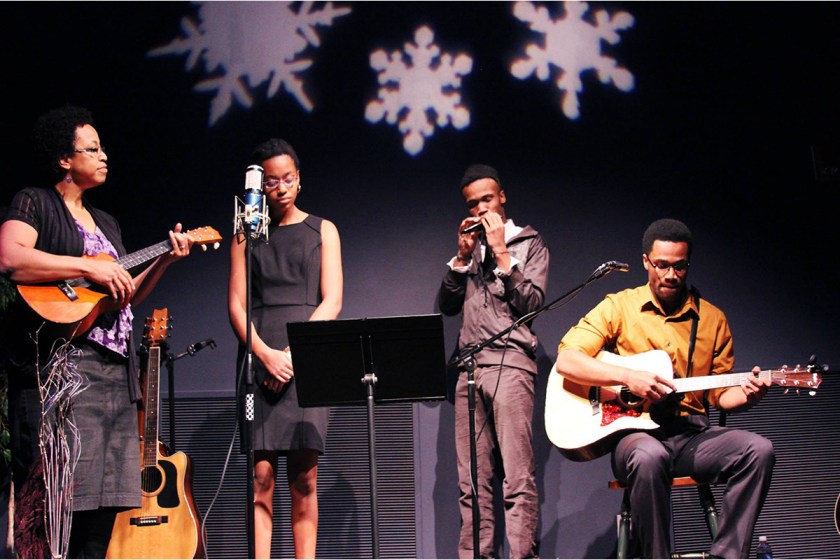
The Baughams are a Christ the King family  who are always blessing our church through their musical talents. Pam, the mother, is a part of Sweet Betsy, a local folk duo, and David (David Baugham Music ) won several large Dayton competitions that included a cd recording and release party (as pictured above. Photo Credit: Jessie Evanhoe). As we considered this series on family culture, the Baughams were one of the first families to come to mind because they seem to have a very distinct family culture and everyone identifies them with music. We are grateful that they agreed to answer a few of our questions together. If there were a “Baugham Family Band,” how would you introduce each one of you?   Andy, “Ace the Poet/Rapper” Anna, “The Songbird on Uke” David,”Lead guitarist, creative Instrumentalist” Ben, “Self taught ocarinist, author and illustrator” Pam, “The Muse” (Beymomce) Jeff, “Manager/ Roadie”   Has playing/singing music always been something that you’ve done together? If so, what did that look like when the kids were little?    Our kids have always …

Love In Our Midst: The Good Samaritan

God is raising the world up to glory, and bringing glory to the Earth. That is one of the hopes that come in the Gospel of Christ. But it is a hard statement to understand in the midst of all the chaos and heartache of this week’s events in our country. What does God’s victory over the world and the evil one and sin look like in our situation? We don’t seem to see great miracles like the apostles and prophets witnessed. And it sometimes does feel like darkness is overcoming the light, and the kingdom of righteousness is retreating from the battlefield. So where is the effects of the Easter victory we proclaim and celebrate every Sunday?