All posts filed under: church year and seasons

“Now All Things Have Been Filled with Light”

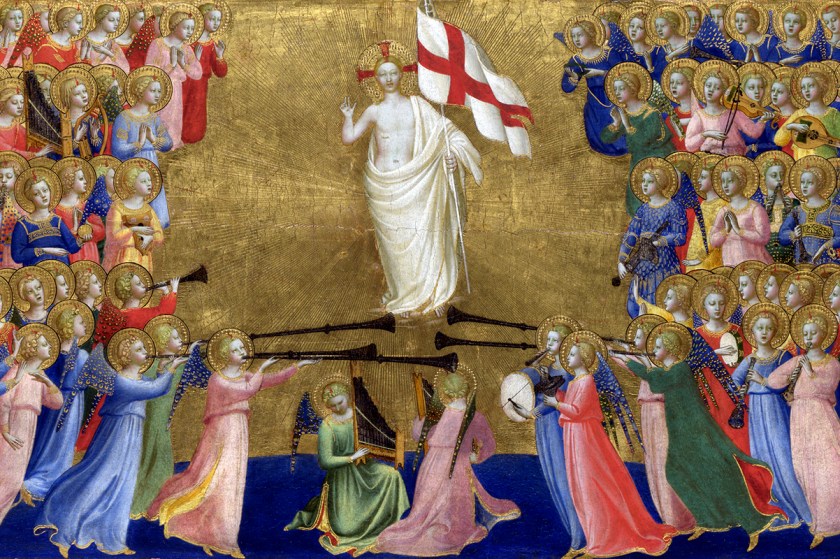
Alleluia! Christ is risen! We have compiled some quotations from the church fathers, for your reflection and joy this Easter. St. John of Damascus: “Now all things have been filled with light, both heaven and earth and those beneath the earth; so let all creation sing Christ’s rising, by which it is established.” St. John Chrysostom: “O Death, where is your sting? O Hell, where is your victory? Christ is risen, and you are overthrown. Christ is risen, and the demons are fallen. Christ is risen, and the angels rejoice. Christ is risen, and life reigns. Christ is risen, and not one dead remains in the grave. For Christ, being risen from the dead, is become the first fruits of those who have fallen asleep.” St. Augustine: “Our Life himself came down into this world and took away our death. He slew it with his own abounding life, and with thunder in his voice he called us from this world to return to him in heaven. From heaven he came down to us, entering first the Virgin’s …

Baking Bread for Maundy Thursday

On Holy Wednesday, we gathered with our young children to prepare for the rest of Holy Week, through baking bread that would be used for our communion service on Maundy Thursday and hearing a Godly Play lesson. The children listened to the account of the Twelve gathering with Jesus in the Upper Room. Then, we went to the church kitchen to bake bread. We used the recipe from Bethany at a Spoon Full of Yum that we posted yesterday. We ended up with these artfully formed, practically unmouthed (oh, toddlers) rolls of dough! Here is our bread before some of the older children processed to present it to our priest during the offertory. It was special for them to be able to participate so integrally in our Maundy Thursday service! Disclaimer to those who partook: All little hands were washed in the making of this bread and the oven was at 500 degrees.  

Our Daily Bread

Yesterday, on Holy Wednesday, the children of our church gathered to make bread that will be used for our Maundy Thursday Holy Communion service (A post on that tomorrow!). We used the following recipe from Bethany Thomso of the food blog, A Spoon Full of Yum.  Bethany is wife to The Farmer, mother of four little ones who she home schools in Tennessee, and a former dietician with a lifelong interest in nutrition. Thank you, Bethany, for your recipe and reflection! In prayer, we express our dependence upon the Lord, drawing sustenance from Him, and, just so, the very act of eating bread should remind us of how utterly dependent we are upon Christ, the Bread of Life.  Jesus taught his disciples to pray that the Father would “give us this day our daily bread” (ESV).  Hearkening back to Proverbs 30:8, we may pray: “…Feed me with the food that is needful” (ESV).   No matter our level of education or socioeconomic status, we will never rise above our basic need for food.  This should …

Bach’s Passion Cantatas: A Musician’s Perspective

As part of Lenten and Holy Week observances, many listen to Bach’s St. Matthew or St. John Passion cantatas. If you don’t own recordings, you can easily find them on Spotify or Youtube. Because of this tradition, we thought it might be interesting to get an insider’s perspective, a musician who has played both cantatas. Fiona Hughes is professional baroque violinist who plays in many early music ensembles, including the Handel and Haydn Society and the Washington Bach Consort. She is also the founder and co-director of Three Notch’d Road. Fiona attends All Saints Anglican Church in Charlottesville, VA. When and where have you played the St. Matthew and St. John Passions? As a violinist, I have performed Bach’s Passions 10-15 times because I specialize in early music of the baroque era.  I have performed the Passions in various locations on the East Coast: Calvary Episcopal Church in Pittsburgh, Oberlin College in Ohio, Staunton Music Festival in Virginia, National Presbyterian in Washington DC, and most recently (yesterday in fact) with the Handel + Haydn Society …

Homely Moments: Children and Holy Week

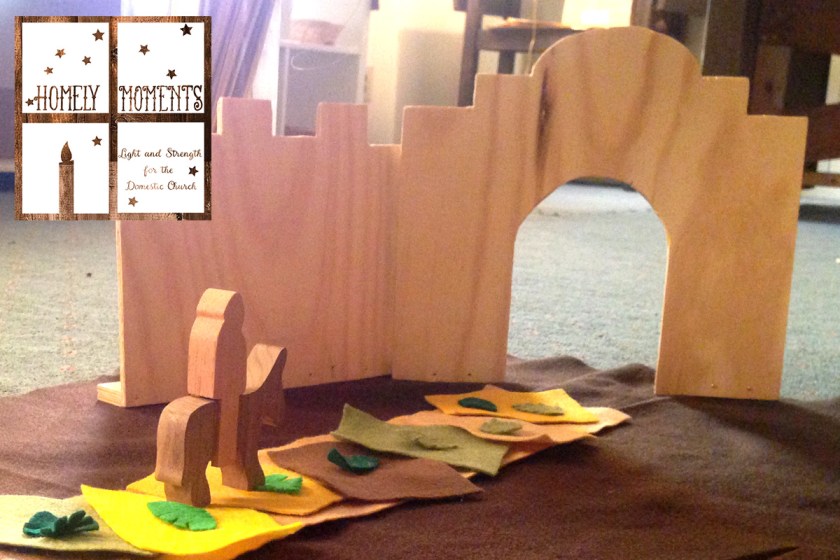
We thought it would be fun to launch an inspirational blog link up this week at The Homely Hours.  If you would like to share pictures or ideas of your family celebrating Holy Week, please add your link below.  It will be fun to see how others celebrate!  Alternatively, tag your photos on Instagram or Facebook with #homelyworship.  The invitation to add your link is open through Easter Sunday.  Have a blessed Holy Week. The Triumphal Entry in godly play.  

Prayer Beads for Kids

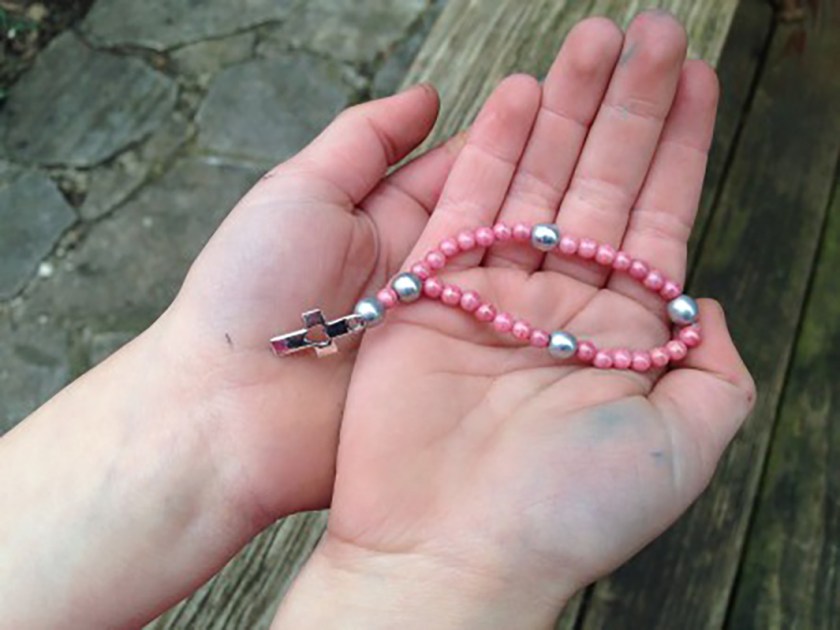
One of my goals this Lent is to spend more time in prayer.  My husband gifted me a beautiful set of Anglican prayer beads for Christmas, and the practice of using the beads and ages old prayers, in a rhythmic, defined manner, has made prayer more accessible to me.  And so I am much more inclined to spend time doing it! As I’ve been keeping them around on my desk areas for use, my charming and curious children have asked me what they are for, and so I decided to make them some of their own.  I was somewhat surprised that they were interested, but we ran with it, and came up with these simple circlets for their use. These can be made out of anything, and would be a fun Lenten family activity, or perhaps a surprise in their Easter basket?  Use what you have on hand; plastic pony beads in two colors on a piece of yarn would work just fine. The important thing is to place your beads in this form: For …

A Simple Easter Garden

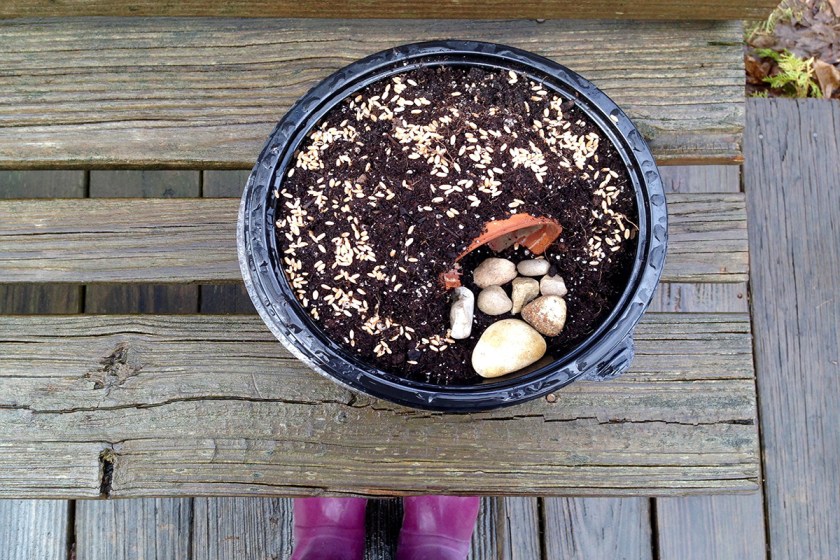
Have you ever heard of the tradition of creating an Easter Garden?  This has become a well-loved custom in our home, that begins on Palm Sunday, and we observe through the difficult Holy Week, to its climax on Easter. It is a lovely and symbolic way to mark the events of Holy Week for children, and the adults quite enjoy it too! Here are some simple steps to create your own Easter Garden: Gather your materials: You will need a container to hold your garden; it is helpful if this container can drain so your garden does not get water-logged.  And of course, a tray to catch the draining water.  Use what you have on hand; ours is a large take-out container with holes poked in the bottom and its plastic lid to catch the drainage. a small terra-cotta pot for the tomb.  This should be relative in size to your container, ours is the smallest size pot you can buy. a large rock to cover your tomb.  Send your children outside to find one! …

“Grand Ordinariness:” Thoughts on Cooking with Limits

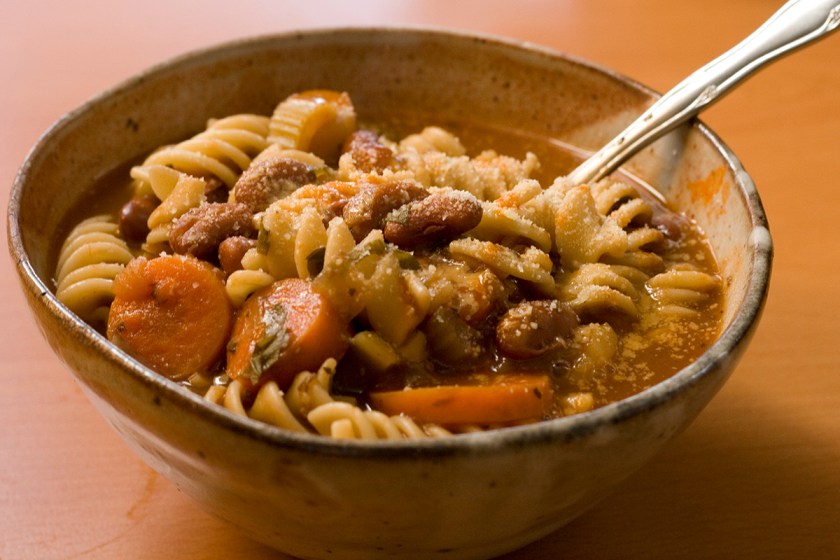
One of my favorite books is Robert Farrar Capon’s “cookbook” The Supper of the Lamb: A Culinary Reflection. Originally written by an Episcopal priest in 1967, it is a gem of a book, describing a great-hearted embrace of creation that fills your soul with joy and laughter. As I was thinking about cooking with constraints during Lent, I was reminded of Capon’s discussion of “ferial” versus “festal” cooking. “Ferial” cooking refers to everyday meals that depend on stretching out expensive food items, like meat, as far as they possibly should go.  Capon insists that both of these have their place, but that there should be a sharp distinction between ordinary eating and extraordinary eating. Capon discusses how the limits of “ferial” cooking have actually led to superb culinary creativity. I often think about how being human means to be limited and how real freedom comes with accepting our limits with joy. This is yet another example of how the accepting of limits becomes the wellspring of creativity. Capon states, “The ferial cuisine, you see, was the poor man’s invention out of necessity, …

Devotional Art: A Lenten Reflection

Our priest’s wife, Sandy Mc Namara, is a teacher and art historian.  She offers this reflection for us in the midst of Lent. Dutch Baroque artist Rembrandt van Rijn over the course of his lifetime painted hundreds of images depicting many Old and New Testament historical events, stories, and parables. Rembrandt is considered a Baroque painter, not only because he lived and painted during the 17th century, but also because his style and technique reflect many major characteristics of that period. Baroque art emphasized the theatrical and dramatic through focused use of strong light/dark contrasts, emotion, and dramatic scenes. One scene of Christ’s earthly ministry that intrigued Rembrandt was the instant when the two disciples who walked the road to Emmaus with Jesus, first realized they were interacting with their Lord after having witnessed his execution and burial. Rembrandt was an artist of human experience who loved to capture the emotional reaction of his subjects at crisis moments. He studied the human face, and attempted to depict the instant of epiphany and realization. This Emmaus …